"If a prospective buyer needs to wait 180 days from an offer, there will be no buyers." David Goss, co-founder of the multifamily brokerage Interra Realty, said that last September, the day Chicago's City Council passed a new anti-gentrification ordinance covering parts of Woodlawn. He was talking about rental buildings. He was not talking about the new single-family homes going up two or three blocks away, because the rule he was objecting to doesn't touch them at all. That gap, between what slows down at the closing table and what doesn't, is a big part of why Woodlawn's median home price has stopped being a useful number for anyone actually comparing the neighborhood to Bronzeville or Hyde Park.
Here is the thesis in plain terms: Woodlawn does not have one housing market right now. It has two, moving at different speeds, priced by different logic, and increasingly separated by a piece of 2026 housing policy that only applies to one of them. If you're pricing a purchase, a rehab, or a small development deal against "the Woodlawn median," you're averaging two neighborhoods that are behaving less and less alike every quarter.
The number everyone quotes
Redfin's most recent neighborhood data put Woodlawn's median sale price at $288,000 in March 2026, down close to 15 percent from the year before. Separate June 2026 market data pegged the neighborhood median closer to $284,900. Those numbers get repeated on every portal and every "is Woodlawn a good investment" listicle, and on their face they suggest a South Side neighborhood that's still relatively affordable and maybe even cooling off.
That number is a blend. It includes the older two-flats and three-flats that make up most of Woodlawn's housing stock, where roughly 80 percent of residents rent rather than own, alongside a much smaller but fast-growing slice of new single-family and small-multifamily construction. Those two categories are not drifting apart slowly. In East Woodlawn specifically, single-family and multifamily home prices doubled between 2019 and 2025 to a median of $440,000, according to the Institute for Housing Studies at DePaul University, a rate of appreciation that The Real Deal reported far outpaced statewide home price growth over the same stretch. Put those two figures side by side and the "median" starts to look less like a single market and more like an average of two.
For comparison, the same window of Redfin data showed South Shore at a median around $180,000 and Bronzeville closer to $305,000, with East Hyde Park well above both at roughly $505,000. Woodlawn's blended median sits in the middle of that range, which is exactly the problem. A buyer using that number to size up Woodlawn against Bronzeville is comparing an average of two Woodlawns to a single Bronzeville market that doesn't have the same split.
Two Woodlawns, priced by different rules
| Older multifamily stock | New single-family and small-lot construction | |
|---|---|---|
| What sets the price | Rent rolls, condition, and blended neighborhood comps | Land cost plus construction cost, priced individually against new comps |
| Recent price signal | Neighborhood median of roughly $284,900 to $288,000 (March to June 2026) | East Woodlawn median of $440,000 for 2025, after doubling since 2019 |
| Closing timeline | Subject to a new tenant right-of-first-refusal window on qualifying rental buildings | Vacant lots and owner-occupied single-family sales close on ordinary timelines |
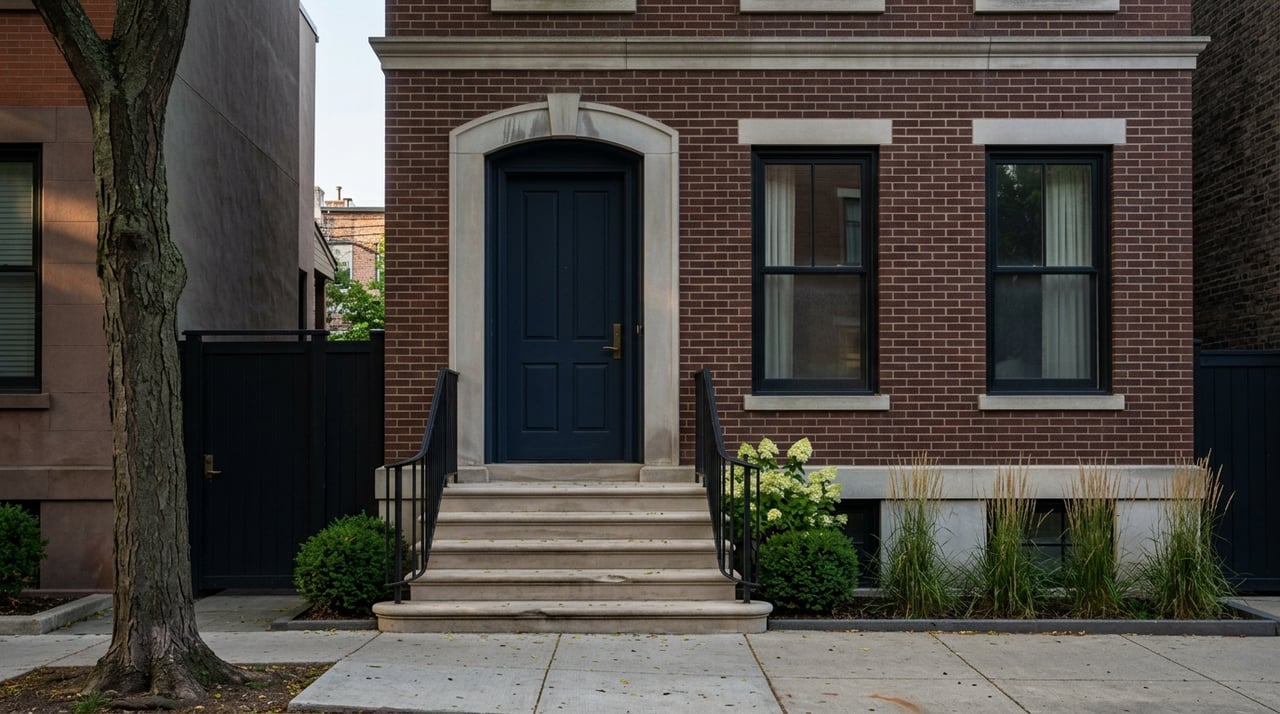
| Where you'll see it | Older brick two-flats and three-flats across the neighborhood | Infill homes on South Ellis Avenue, INSPIRE Woodlawn's 14 townhomes on Drexel |
The bottom row of that table is the part most median-price content skips entirely, and it's the actual mechanism driving the split.
The 180-day clock only runs on one side of the seam
The ordinance Goss was reacting to, known as the Jackson Park Housing Pilot Program, took effect in April 2026, seven months after passage, across parts of Woodlawn, South Shore, and Greater Grand Crossing. Under the rule, landlords of qualifying rental buildings must notify tenants before selling and, per reporting from The Real Deal, wait 180 days to give tenants the chance to organize, make an offer, and secure financing to buy the building themselves. It also requires landlords to show "just cause" for evictions while a property is actively listed. The city's own program rules, laid out in its Jackson Park district TOPA rules, spell out the notice forms, delivery requirements, and documentation an owner has to produce.
That waiting period does not apply to a vacant lot sale. It does not apply to an owner-occupied single-family closing. It applies to occupied rental buildings, which is precisely the category that makes up most of Woodlawn's older housing stock. Industry groups including the Neighborhood Building Owners Alliance and Illinois Realtors have argued publicly that a mandatory multi-month pause on a sale discourages lenders and buyers from touching multifamily deals in the pilot area at all, since a slower, less certain closing timeline gets priced into every offer whether or not any tenant group ever organizes.
Here's the twist that a Harford-style read of the data surfaces: the enforcement record on the predecessor rule suggests the friction is more about perceived deal risk than actual outcomes. The 2020 Woodlawn Housing Preservation Ordinance included a similar notice requirement, and a review by the Illinois Answers Project found that despite dozens of multifamily buildings changing hands in Woodlawn since 2020, city housing department records show not one landlord filed the required sale notice with tenants or the city. The rule existed on paper. It went largely unenforced in practice. That mismatch cuts both ways for anyone underwriting a deal in the pilot area now: the legal exposure is real enough that lenders and buyers are factoring it into pricing and timelines, but the actual track record of enforcement has been thin enough that treating every multifamily closing as an automatic six-month delay would be its own kind of mistake. The honest answer is that the risk is priced in unevenly, and that unevenness is itself information for anyone comparing a multifamily deal in Woodlawn to one in a neighborhood without this ordinance.
Where the capital goes when one path is smoother
Money tends to flow toward the transaction with fewer variables, and Woodlawn's numbers show that clearly. The 60637 ZIP code's inventory of vacant lots dropped from 964 to 798 over the past decade, according to Cook County Assessor's Office data cited by Crain's and reported by The Real Deal, a sign of just how much building has happened on land that carries none of the tenant-notice friction attached to occupied rental buildings. The City of Chicago itself still holds more than 300 developable lots in Woodlawn, including a large concentration along 63rd Street, according to its own Woodlawn Community Development page, which the Department of Planning and Development continues to manage and release for new construction rather than acquisition of existing rental stock.
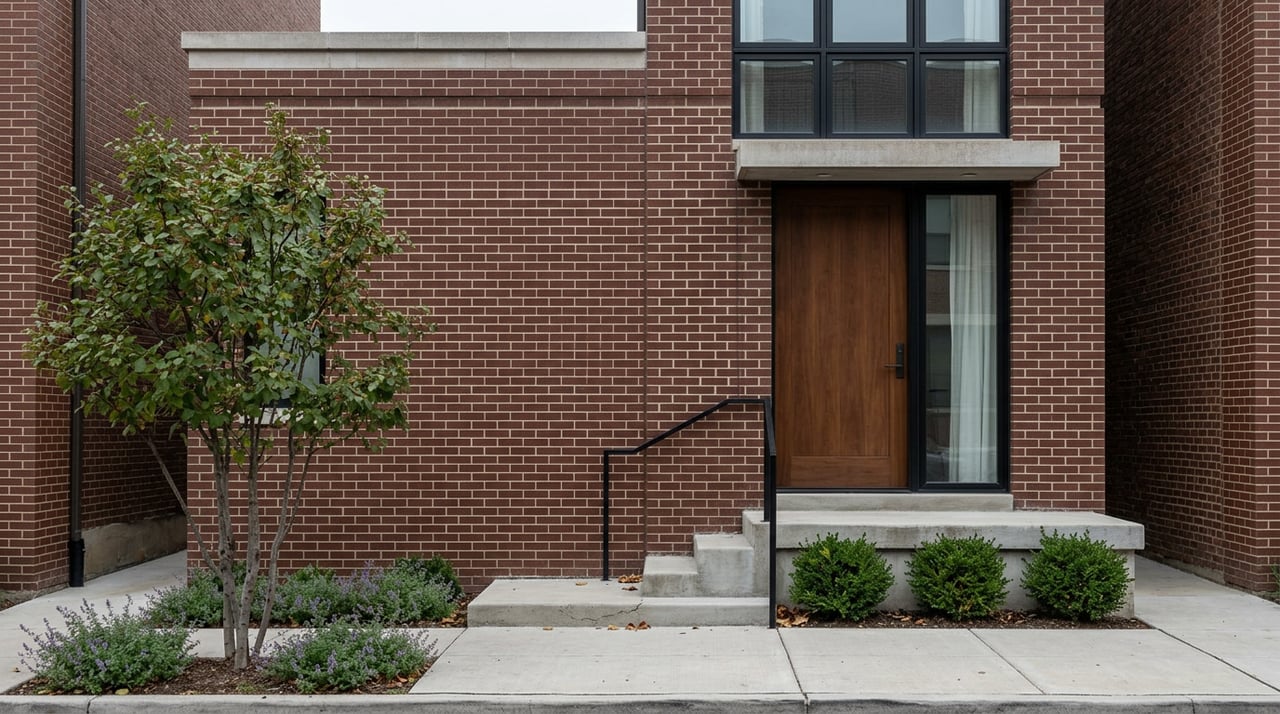
That distinction shows up in what's actually getting built. The "shipyard style" infill homes reported along South Ellis Avenue have sold for close to $1 million apiece, standing in visible contrast to the older brick multifamily buildings around them. INSPIRE Woodlawn, a 14-unit gated townhome development designed by Studio Dwell Architects on Drexel Avenue, sits at the upper end of that new-construction band, with adjacent parcels at 6415, 6413, and 6409 Drexel already permitted for additional multifamily development. None of that activity runs into the 180-day clock, because none of it involves an occupied rental building changing hands.
Not every vacant lot deal looks the same
It's worth being specific about what "new construction" means in Woodlawn, because it isn't only the near-million-dollar end of the market. The Cook County Land Bank Authority's Buy Back the Block initiative saw five community developers, Derrick Walker, DaJuan Robinson, Bonita Harrison, Sean Jones, and Keith Lindsey, purchase 11 vacant lots and build ten three-flat buildings that became West Woodlawn Pointe, delivering 30 three-bedroom, two-bath homes. Chicago Community Capital, a certified community development financial institution focused on capital access for real estate investors in low-to-moderate income neighborhoods, backed the project and committed an additional $2 million toward its next phase. That's a different price point and a different financing structure than a $1 million spec home, built on the same kind of vacant land and moving through the same friction-free closing process. For a mom-and-pop investor or a first-time developer weighing what's actually attainable in Woodlawn, that gap between the two ends of new construction matters as much as the gap between new construction and the older rental stock.
What this means before you make an offer
If you're comparing Woodlawn to another South Side or near-south neighborhood, ask which Woodlawn you're actually pricing. A single-family purchase or ground-up build competes against a market that's already at a $440,000 median in the East Woodlawn corridor and moving on ordinary closing timelines. A multifamily acquisition, by contrast, sits inside a pilot area where notice requirements and a right-of-first-refusal window are now part of the deal, even if enforcement history suggests the practical risk varies by building and by buyer. Neither number, taken alone, tells you what the neighborhood-wide median is trying to average together.
A few questions worth asking before you sign anything
Does the 180-day rule apply to a single-family home purchase in Woodlawn? No. The Jackson Park Housing Pilot Program's notice and right-of-first-refusal provisions apply to qualifying occupied rental buildings, not to vacant lots or owner-occupied single-family sales.
Does every qualifying multifamily sale in Woodlawn actually get delayed six months? Not necessarily. The ordinance requires the notice and waiting period, but the enforcement record on its 2020 predecessor showed landlords frequently did not file the required paperwork. Buyers and sellers should still plan around the requirement, since the legal exposure exists regardless of how consistently it's enforced.
Why is new construction in Woodlawn priced so far above the neighborhood median? Because the median blends older, lower-priced multifamily stock with a smaller volume of new single-family and small-lot construction that's appreciating on its own trajectory, driven by land scarcity and proximity to the Obama Presidential Center rather than the broader rental market.
If you're weighing a purchase, a rehab, or a small development deal in Woodlawn and want a read on which side of this split your target property sits on, Naja Morris works this corridor daily with buyers, owner-occupiers, and first-time developers alike. Reach out to schedule a consultation or get access to private listings before they hit the wider market.